Our Flock
LIVING WITH WOOL
A life of care, connection & making.
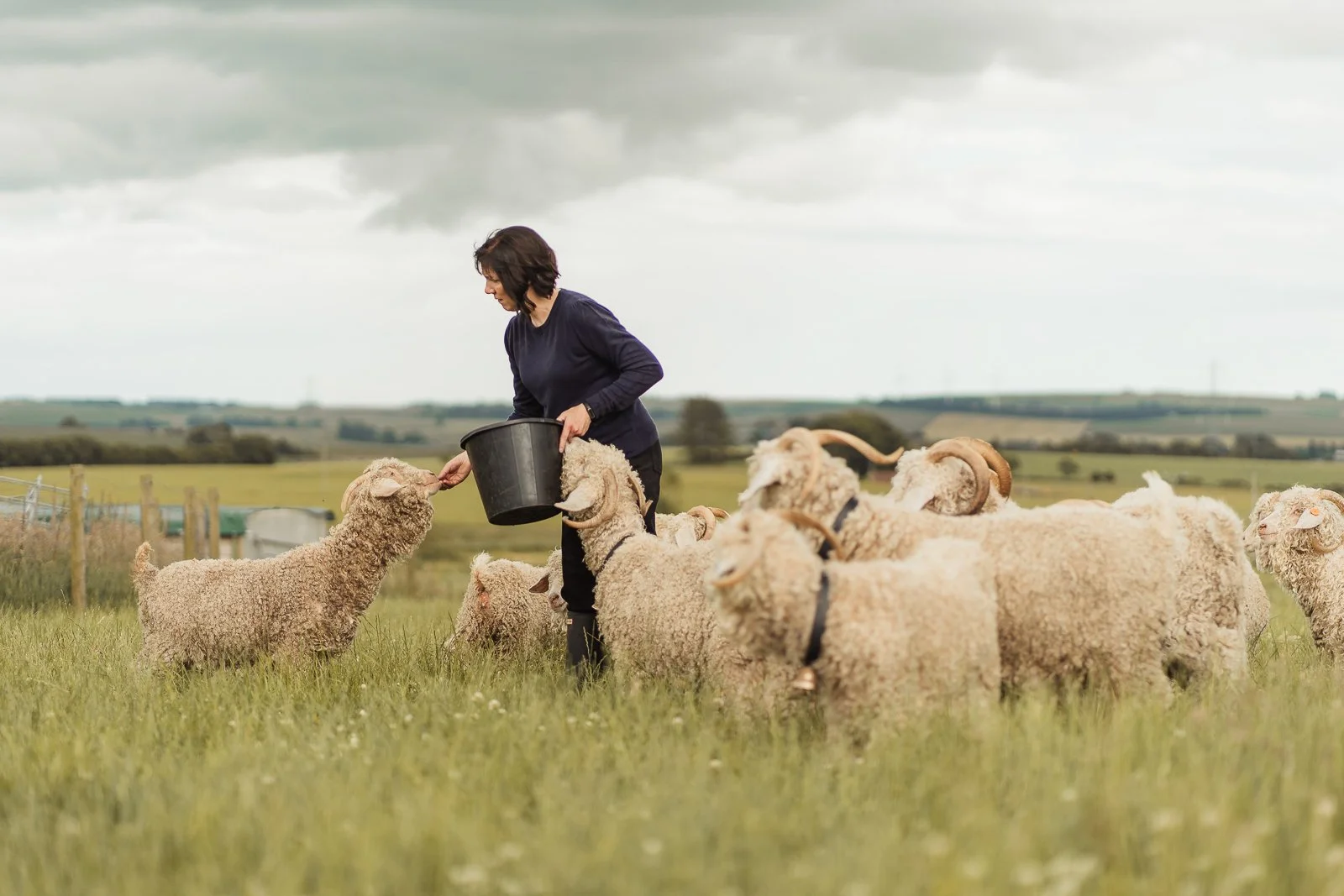
At Goatherdess, wool begins with caring for the flock who grows it.
We keep small flocks of rare and minority breed sheep and Angora goats, knowing them individually — their characters, quirks and place within the flock. They are part of everyday life here, through every season. That care follows the wool.
When a fleece comes through the farm gate and into The Wool Room, our on farm studio, we work with what it gives us — its colour, texture, weight and character shaping what it may become. Nothing is produced simply to make more.The wool becomes clothing in small quantities, shaped by the seasons and the flock. Learn more.
And when a garment leaves Goatherdess, we hope its story continues. To be worn, lived in, repaired and loved. To gather memories and become part of someone's life.
Living with Wool is our belief that caring for wool means caring for the whole journey — from the animal who grows it, to the hands that make it, to the person who wears it.
A FUTURE FOR RARE BREEDS
Once, Ouessant and Castlemilk Moorit sheep clothed communities.
Their wool was part of everyday life — grown on the hills and fields around them, gathered, spun, woven and made into what people needed to wear. The flock was part of everyday life, and its wool had a purpose within it.
Today, many of these breeds are no longer part of that story.
Goatherdess exists to help make them a future.
Collections are made in small quantities, shaped by the animals, the land and the seasons in which we live.
It is a quieter way of working in fashion.
And perhaps that is how we give these breeds a place in the future — not simply by keeping them, but by finding new reasons to value what they give us.
Our aim is simple: to make beautiful clothes that give people another reason to care about where wool comes from, and help rare breeds remain part of our landscape for generations to come.
Our Mission
Meet Goatherdess
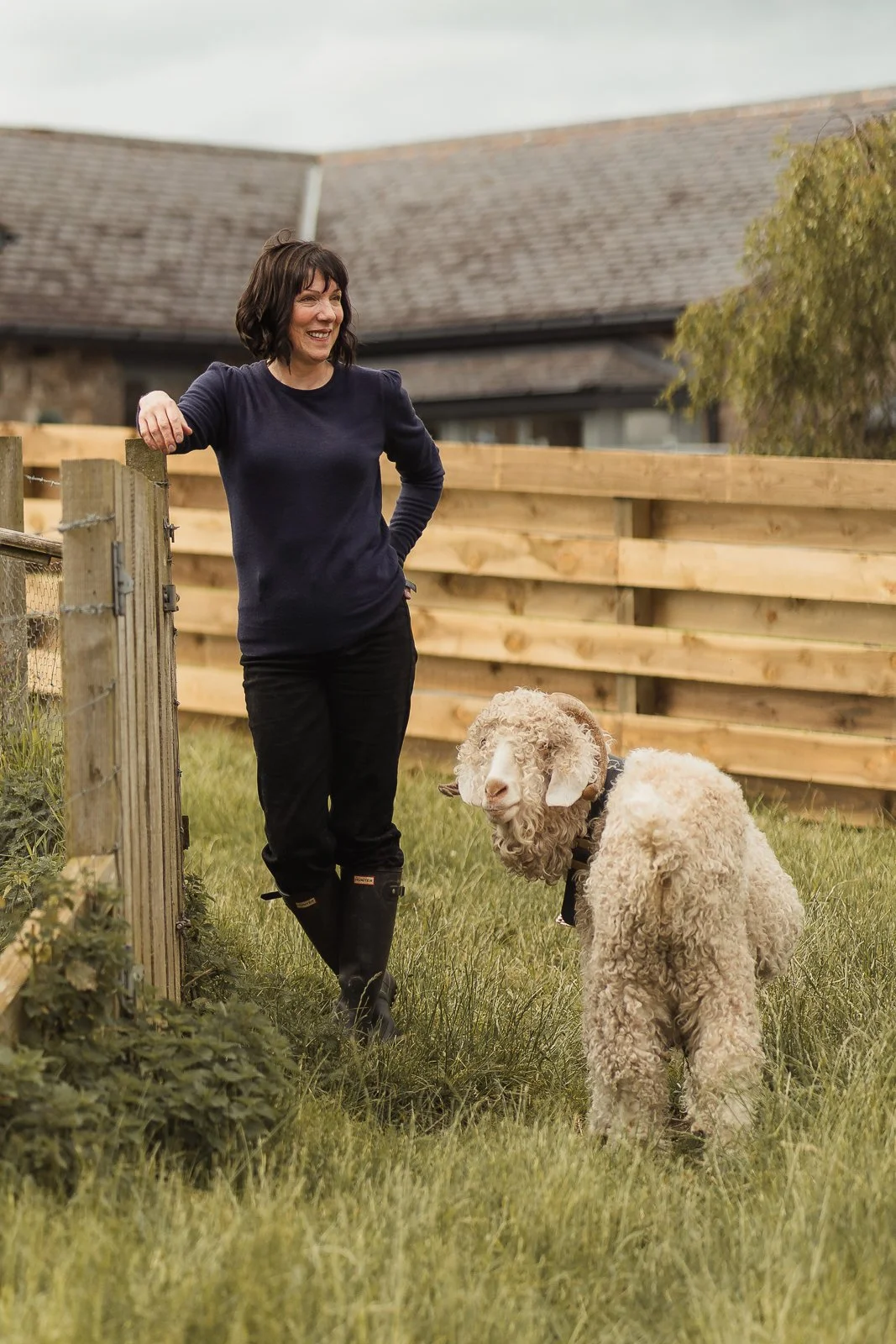
HI I’M POLLY, SCIENTIST. FASHION GRADUATE &FARMER.
In 2012, I left my career in science and moved to a smallholding in Scotland with three pet Angora goats.
Fourteen years later, those three goats have become a flock of rare and minority-breed sheep and Angora goats — and a life built around wool.
The scientist in me has always wanted to understand how things work: the fleece, the fibre and the processes that transform one into another. The fashion graduate learned how to turn that understanding into cloth and clothing. And the farmer has taught me the most important lessons of all: that the care of the flock comes first, that nothing happens in isolation, and that ultimately, Mother Nature and the seasons have the final say.
My first experiments were with mohair, exploring how it could be transformed into a fabric with the look and feel of fur. That became the foundation of the original Goatherdess faux fur. From there came wool and mohair knitwear, woven tweeds and cloth coloured with plants gathered from the land.
The plants became another part of the journey.
I began by looking at what was already growing around us, learning which plants could give colour and how to work with them. Nettles were an obvious place to start. They grow abundantly here, and I learned to use the tender tips for dyeing while returning the rest to the animals as part of their natural forage and nutrition.
That way of thinking began to change how I looked at the whole smallholding. Instead of seeing separate things — animals, plants, wool, trees and land — I began to see a living system, where each could have a purpose beyond the obvious one.
We planted an orchard, both for the future harvest and to bring more diversity to the land. Willow became part of the landscape too, providing browse for the goats and sheep and forming part of the natural resources we can draw upon for their wellbeing.
Nettles, dock, chamomile and other plants are gathered according to the seasons, each bringing its own colour and character to the cloth.
It is a way of working that has evolved slowly, through observation, experimentation and living alongside the animals.
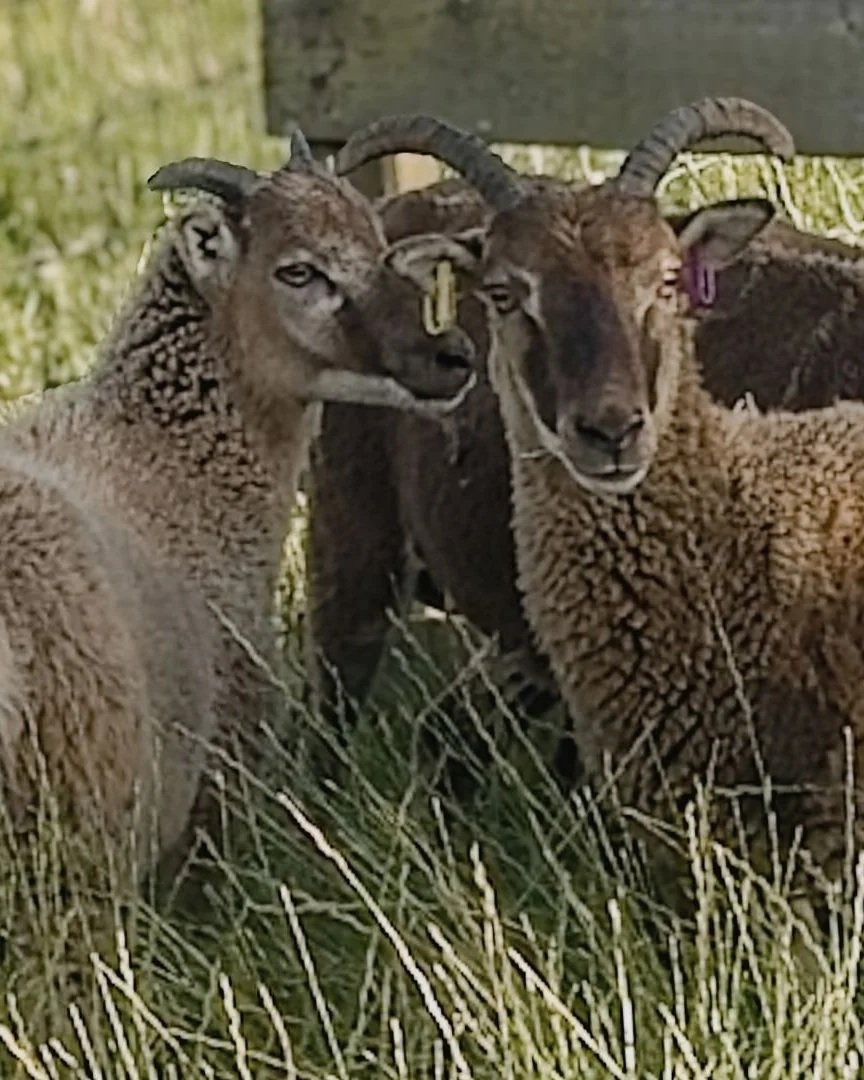
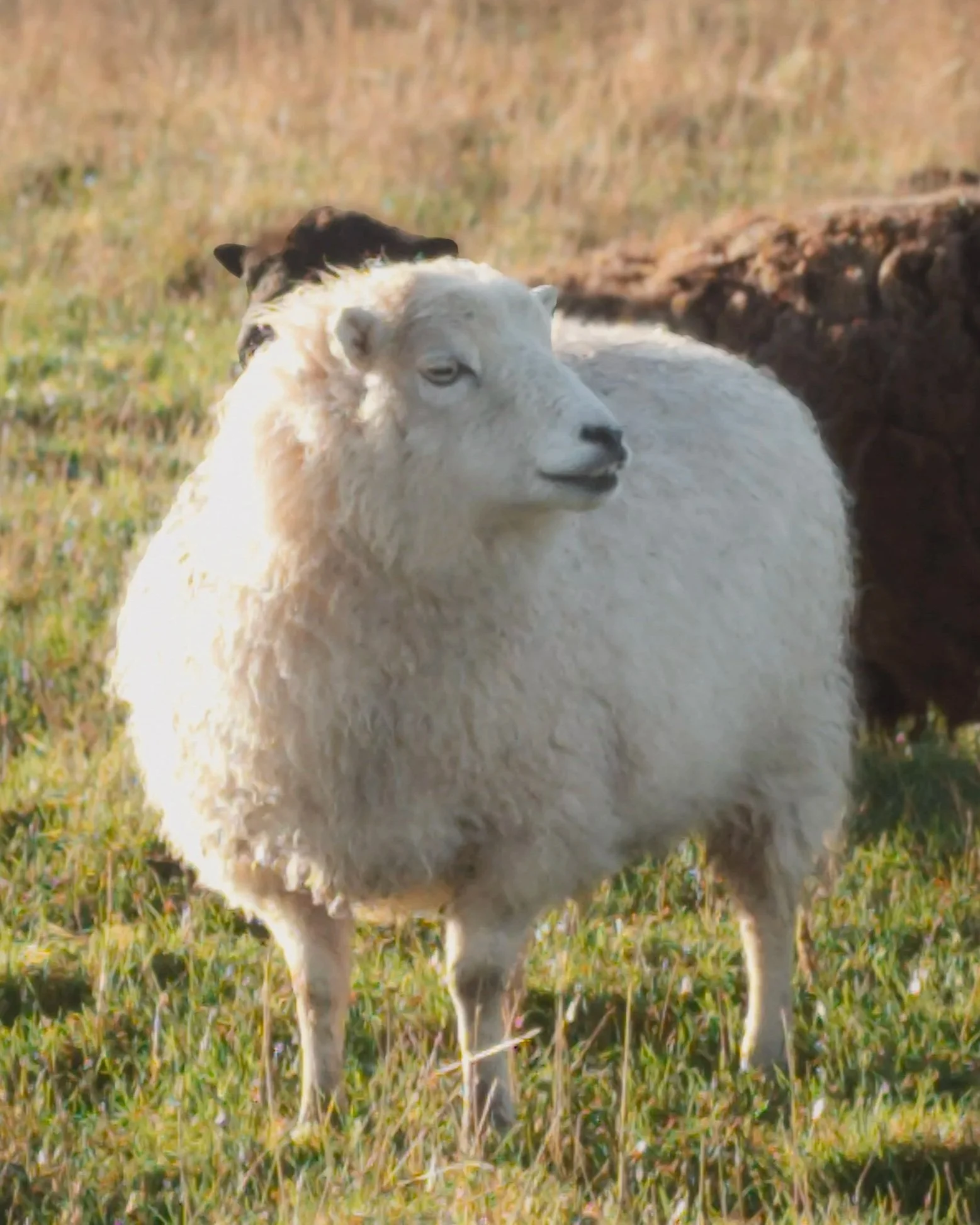
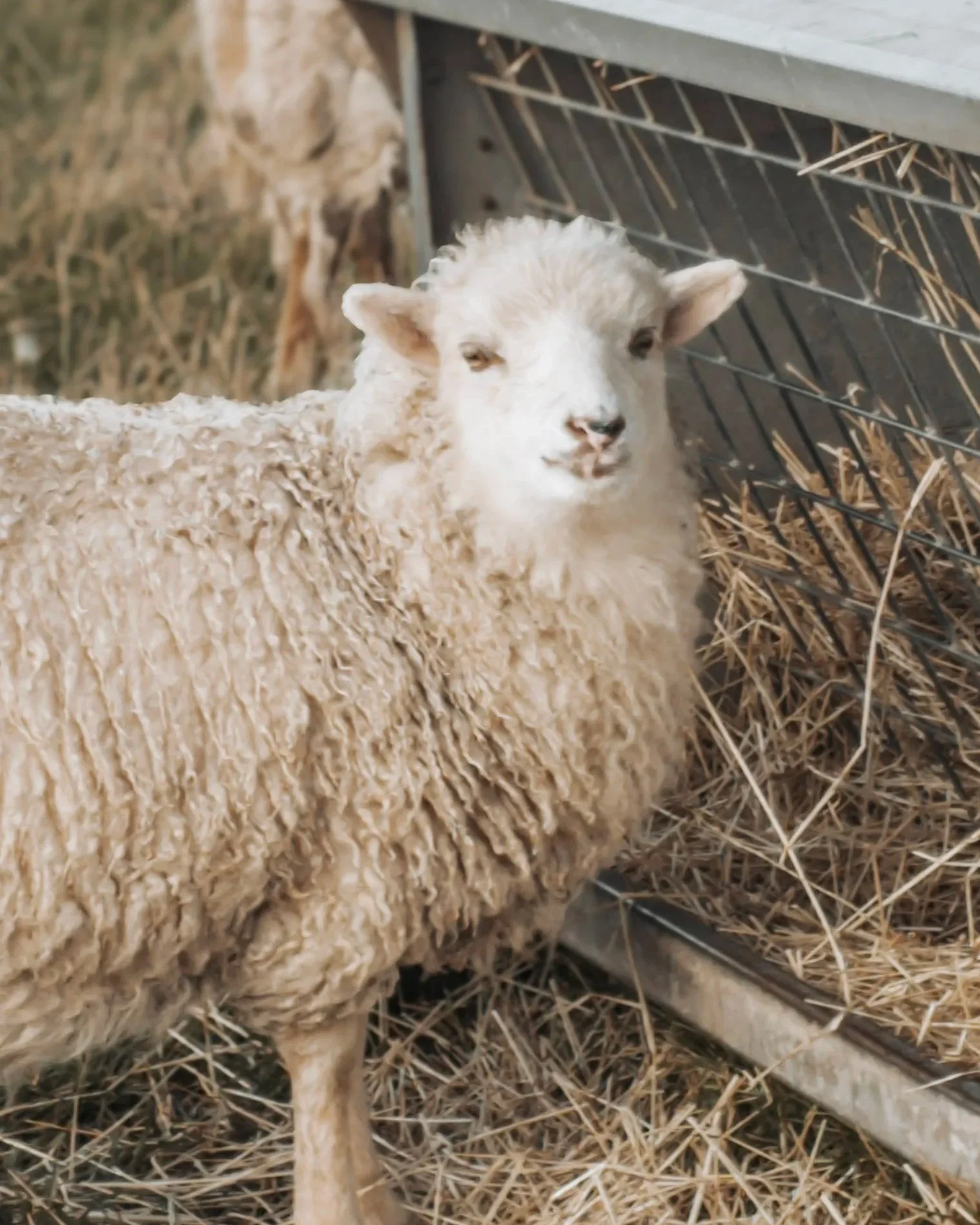
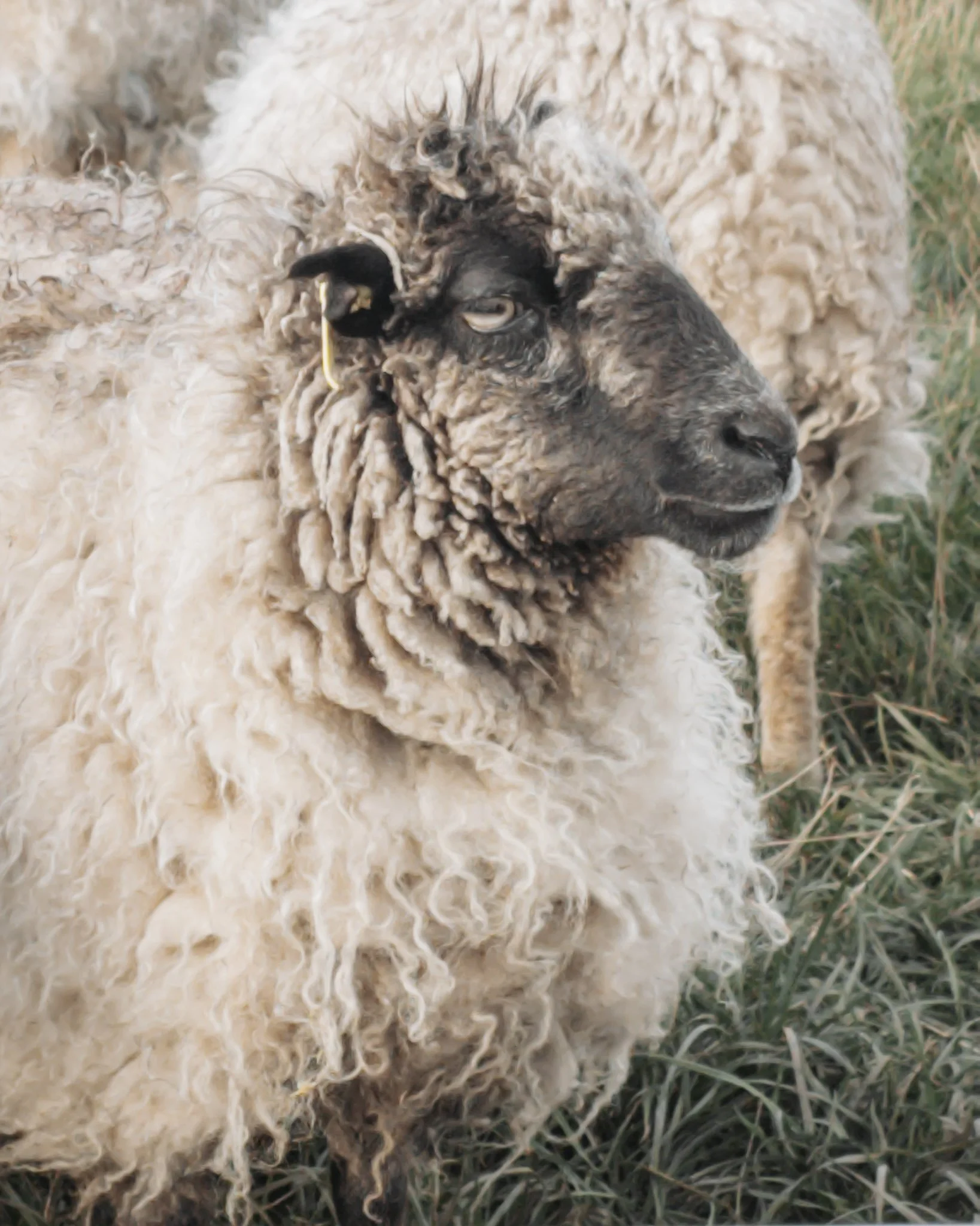

“Protecting Rare and Endangered Sheep and Minority Breeds through slow, thoughtful craft”
The Flock
OUESSANT
Small, hardy and full of character, the Ouessant are one of the smallest sheep breeds in the world. Originally from the windswept island of Ouessant, off the coast of Brittany, they carry something of that landscape in their fleeces.
Their beautifully soft wool comes naturally in white, brown, silver and black, with the darker fleeces often catching the sun and weathering into beautiful shades. No two fleeces are quite alike; even within the same flock, colour shifts with age, season and sunlight.
It is this quiet variation that makes Ouessant wool so beautiful to work with — a palette given to us by the sheep themselves.
CASTLEMILK MOORITS
There is something almost deerlike about a Castlemilk Moorit. Flighty, fine-boned and wonderfully alert, they have an elegance that can seem quite unlike the sheep they are.
The breed was developed in Scotland in the early twentieth century by bringing together Manx Loaghtan, Moorit Shetland and Mouflon — three breeds whose qualities came together to create this distinctive sheep now on the endangered list.
Their fleece carries its own quiet beauty: a rich red-brown that gradually softens in the sunlight to the colour of café latte. No dye is needed to create the palette; it belongs entirely to the sheep.
ANGORA GOATS
Goatherdess began with three Angora goats — Rosemary, Oregano and Parsley.
They arrived here with me more than fourteen years ago, and from those three goats grew a smallholding, a flock, and a life lived alongside wool.
Rosemary, Oregano and Parsley have now sadly passed away, within a few weeks of one another, each having lived to more than fourteen years old.
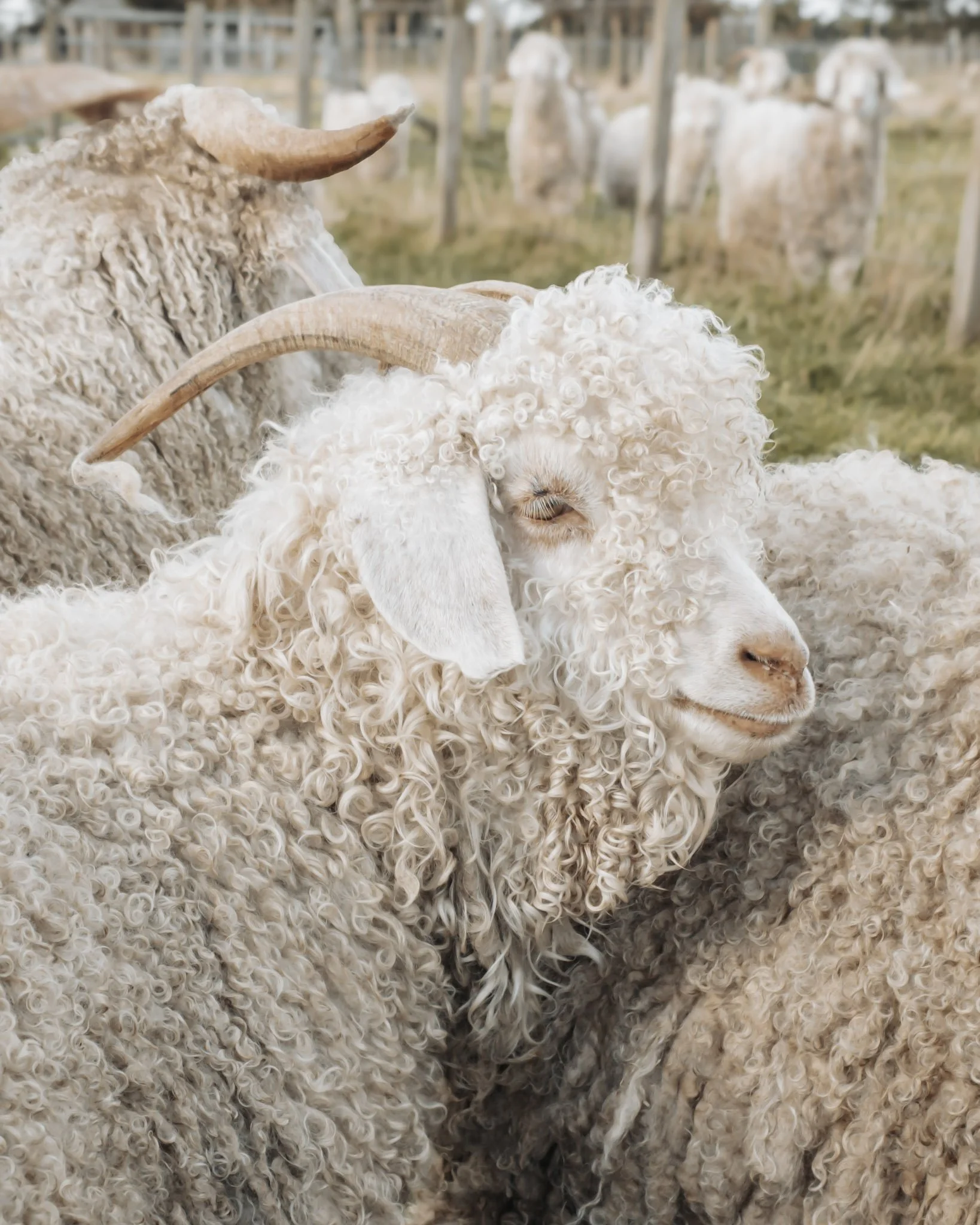
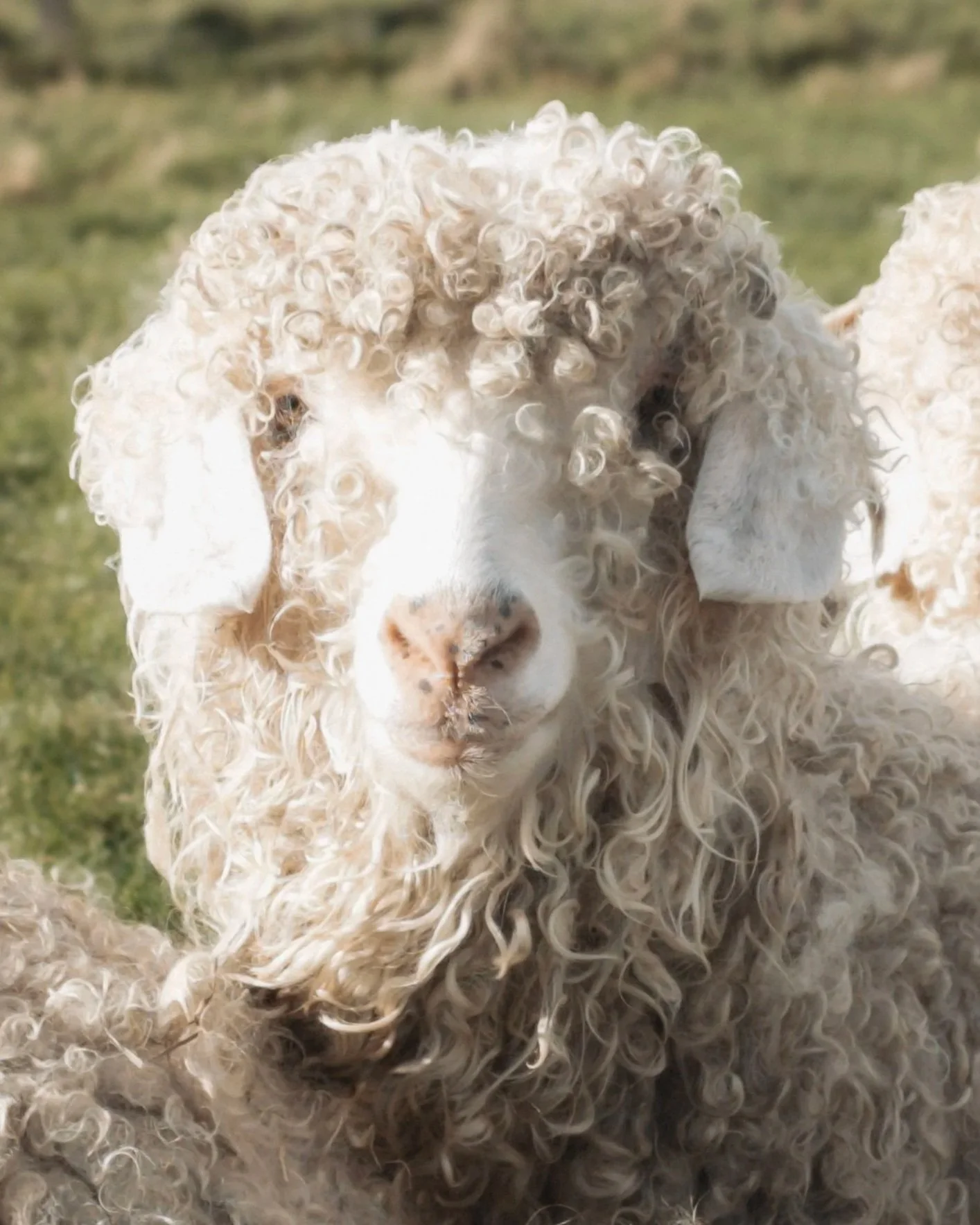
Angora goats have long, lustrous fleece — mohair — and this was the fibre that first drew me into the world of wool. Years later, angora goats remain at the heart of the smallholding and of the story.
Mohair, known as the diamond of all fibres, has a beautiful natural sheen and softness, catching the light differently as the seasons change. It can be spun, dyed, knitted and felted, or transformed into the soft, tactile faux fur that first brought Goatherdess to life.
But for all its beauty, the fibre is only part of the story. These are the goats I fell in love with.