
Mohair vs Wool: What’s the Difference - and Why It Matters
On misty Highland mornings, when the hills sit quietly beneath a veil of cloud, there is a soft rustle that carries on the wind. It is the sound of fleece and fibre moving gently in the breeze — Angora goats quietly browsing, rare breed sheep grazing the slopes, and the quiet promise of cloth yet to be made.
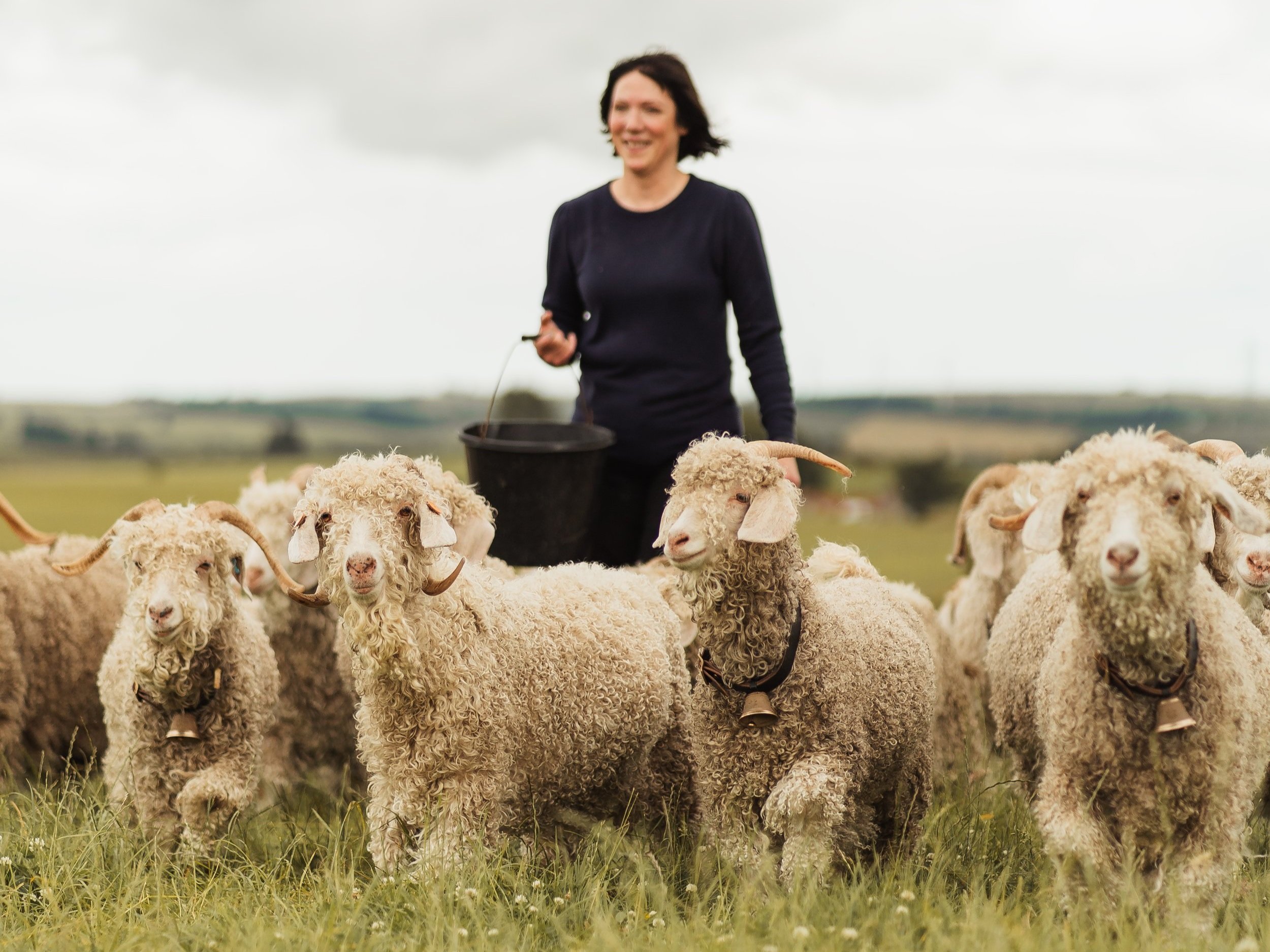
Angora Goats “Leading the Way”
At Goatherdess, mohair and wool are not abstract materials. They begin as living, breathing animals, loved and cared for through seasons of snow, frost, rain, sun and bloom. Understanding the difference between these two remarkable fibres is not only a matter of texture or warmth — it is about choosing clothing that respects the land, the animals, and the rhythm of slow making.
So what truly sets mohair and wool apart? Let us walk through it together.
Where Mohair Comes From
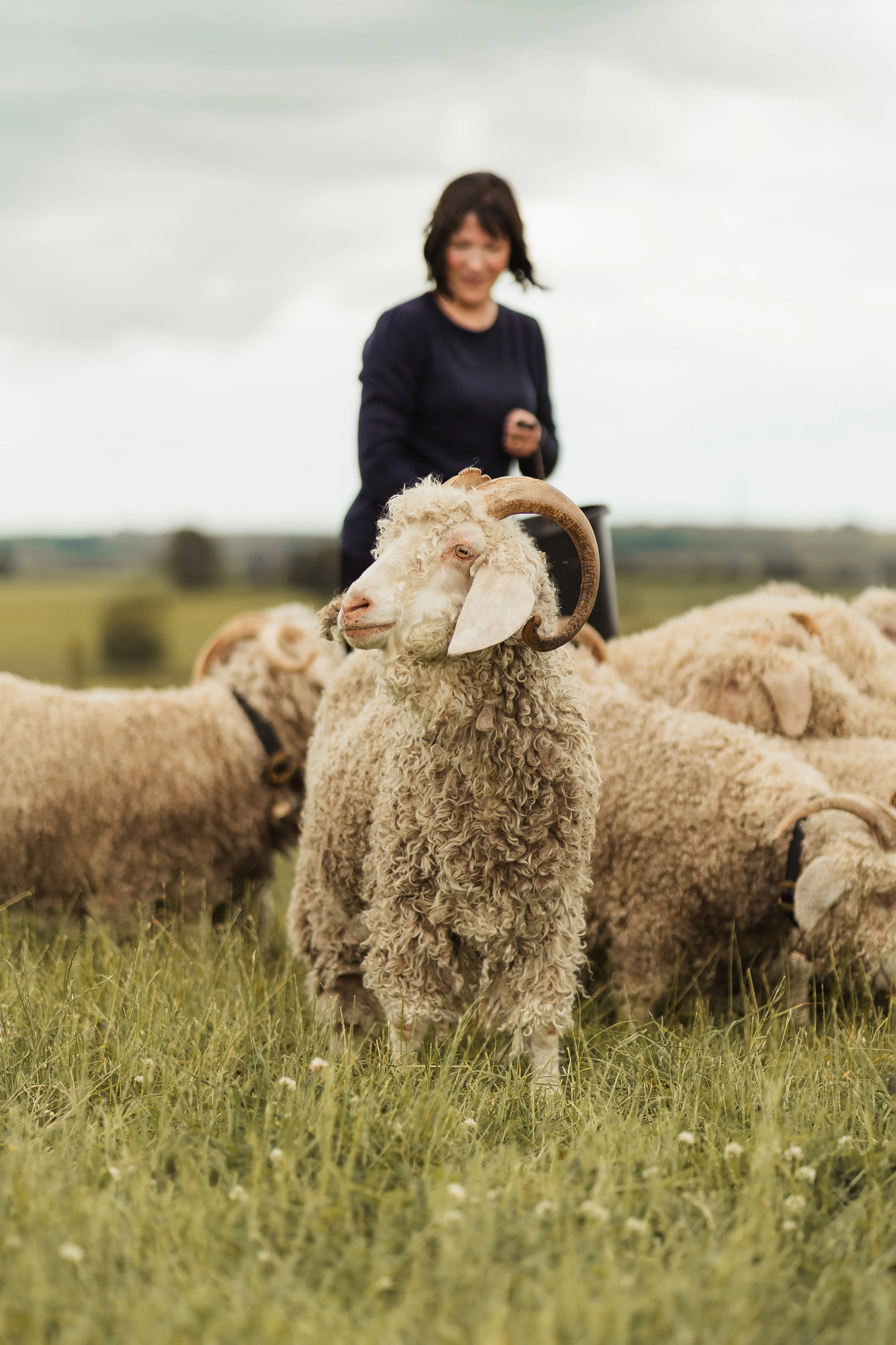
Mohair is grown by Angora goats — elegant, curious creatures with long, lustrous locks that shimmer softly in the light. Unlike sheep’s wool, mohair fibres are smooth and silky, giving them a natural sheen and fluid drape.
Here in the Highlands, our goats grow their coats, shaped by the weather and the seasons. Their fibre is harvested through careful, calm haircuts — never rushed — allowing the animals comfort and dignity, while preserving the long, strong fibres that make mohair so prized.
Mohair is:
Light yet incredibly warm
Naturally insulating without heaviness
Resistant to creasing and matting
Long-lasting and strong
Soft with a luminous finish
This is why mohair has long been treasured for outerwear, trims, and luxurious knitwear — pieces meant to endure both wear and time.
Is Mohair Scratchy? The Truth Behind the Myth
Mohair is often misunderstood. Some people associate it with itchiness, yet this sensation rarely comes from the fibre itself — it comes from how and where the mohair is produced.
High-quality mohair, taken from well-cared-for Angora goats and gently processed, is naturally smooth and soft. The individual fibres have a sleek surface that reflects light and resists felting, which is why mohair feels cool to the touch yet warm when worn.
Scratchiness usually occurs when fibres are:
Harvested from older animals with coarser (kemp) hair
Poorly sorted or blended with rough fibres
Processed aggressively
Spun too tightly for their intended use
At Goatherdess, our mohair is selected carefully and handled slowly, preserving the natural softness of the fibre. When mohair is respected from pasture to garment, it becomes airy, elegant and gentle against the skin — not harsh.
Like wool, mohair is a living fibre. Its quality reflects the life behind it.
Where Wool Comes From
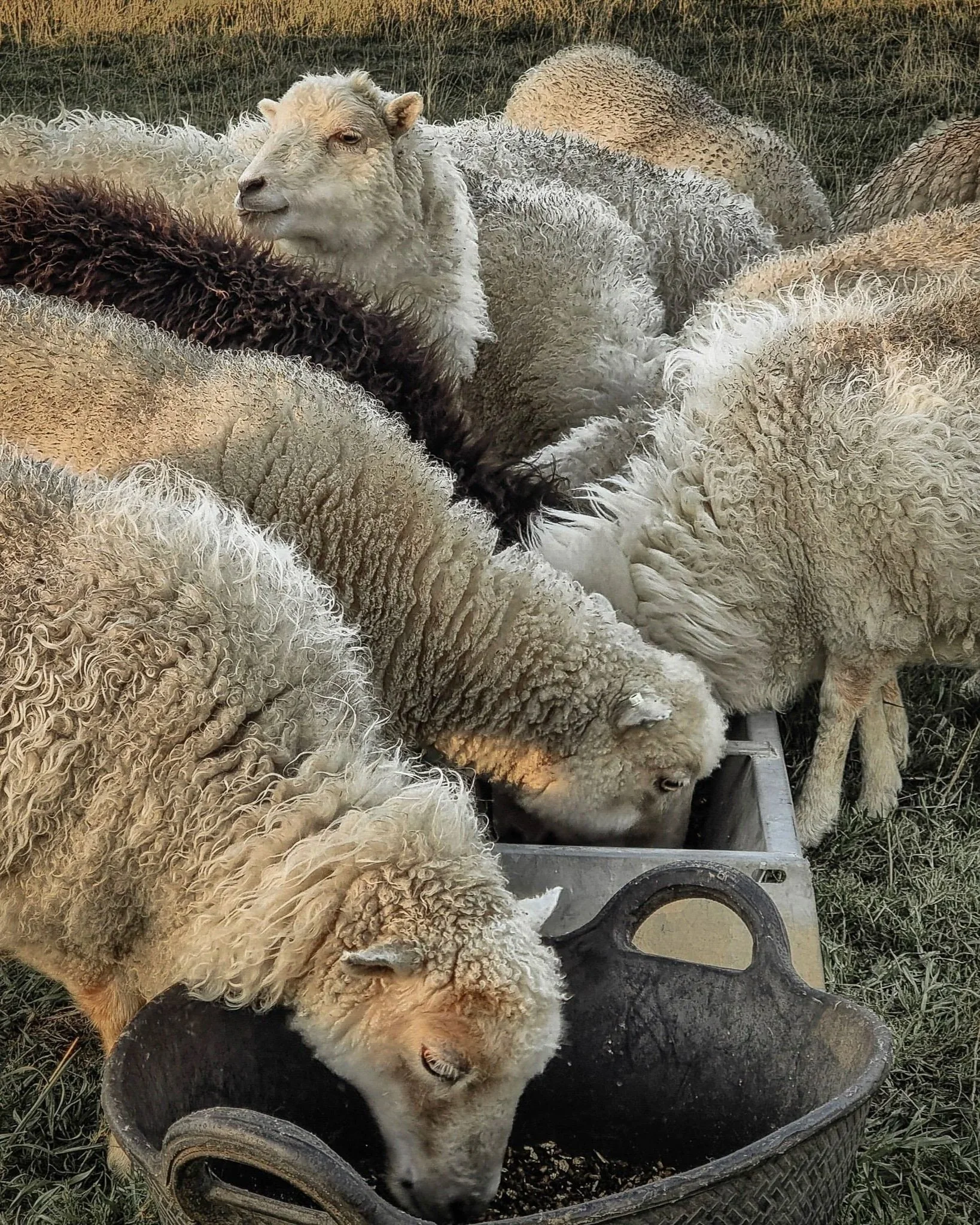
Wool comes from sheep, whose fleece has warmed humanity for thousands of years. It is a humble fibre, yet one of extraordinary intelligence. Wool breathes. It insulates. It adapts.
Our rare breed Ouessant sheep produce fleeces rich with character — crimpy, springy fibres that trap tiny pockets of air, keeping warmth close to the body in winter while remaining breathable in milder weather.
Wool is:
Naturally temperature-regulating
Highly breathable
Moisture-wicking
Elastic and resilient
Perfect for everyday wear
It is the fibre of shepherds and poets, of working hands and winter hearths.
Mohair vs Wool — The True Difference
While both fibres come from the land, they behave very differently.
Mohair is smooth and glossy, lending itself to flowing silhouettes, soft structure, and gentle drama. It reflects light beautifully and brings elegance to outer layers.
Wool is matte, springy and grounding. It provides comfort, structure, and durability. It holds warmth close without overheating.
At Goatherdess, we often blend these fibres — marrying mohair’s softness and glow with wool’s strength and breathability. Together, they create garments that feel both romantic and practical, luxurious yet rooted.

Why Natural Fibres Matter
In a world of synthetic fabrics and fast fashion, choosing natural fibres is an act of quiet resistance.
Mohair and wool are:
Biodegradable
Renewable
Long-lasting
Repairable
Free from plastic microfibres
They age gracefully, soften with wear, and carry stories in every thread. A well-made wool or mohair garment does not belong to a season — it belongs to a lifetime.
When you choose natural fibres, you are choosing clothing that honours the animal, respects the land, and reduces waste. You are choosing slow fashion — fashion with memory.
From Pasture to Parlour to Glen
At Goatherdess, mohair and wool travel a gentle path.
From pasture — where goats and sheep roam Highland hillsides.
To parlour — where fibres are spun, woven, and shaped by hand.
To glen — where garments return to the landscape they were born from, worn on walks, gatherings, fireside evenings and everyday life. Eventually at end of its life returning to the ground.
This circular story is at the heart of everything we make.
Choosing Between Mohair and Wool
There is no “better” fibre — only what suits your life and style.
Choose mohair if you love:
Soft drape and movement
Light warmth without bulk
Elegant outer layers
Romantic textures
Choose wool if you value:
Everyday comfort
Temperature control
Durability
Classic structure
Or choose both — as we so often do — and let the fibres work together.
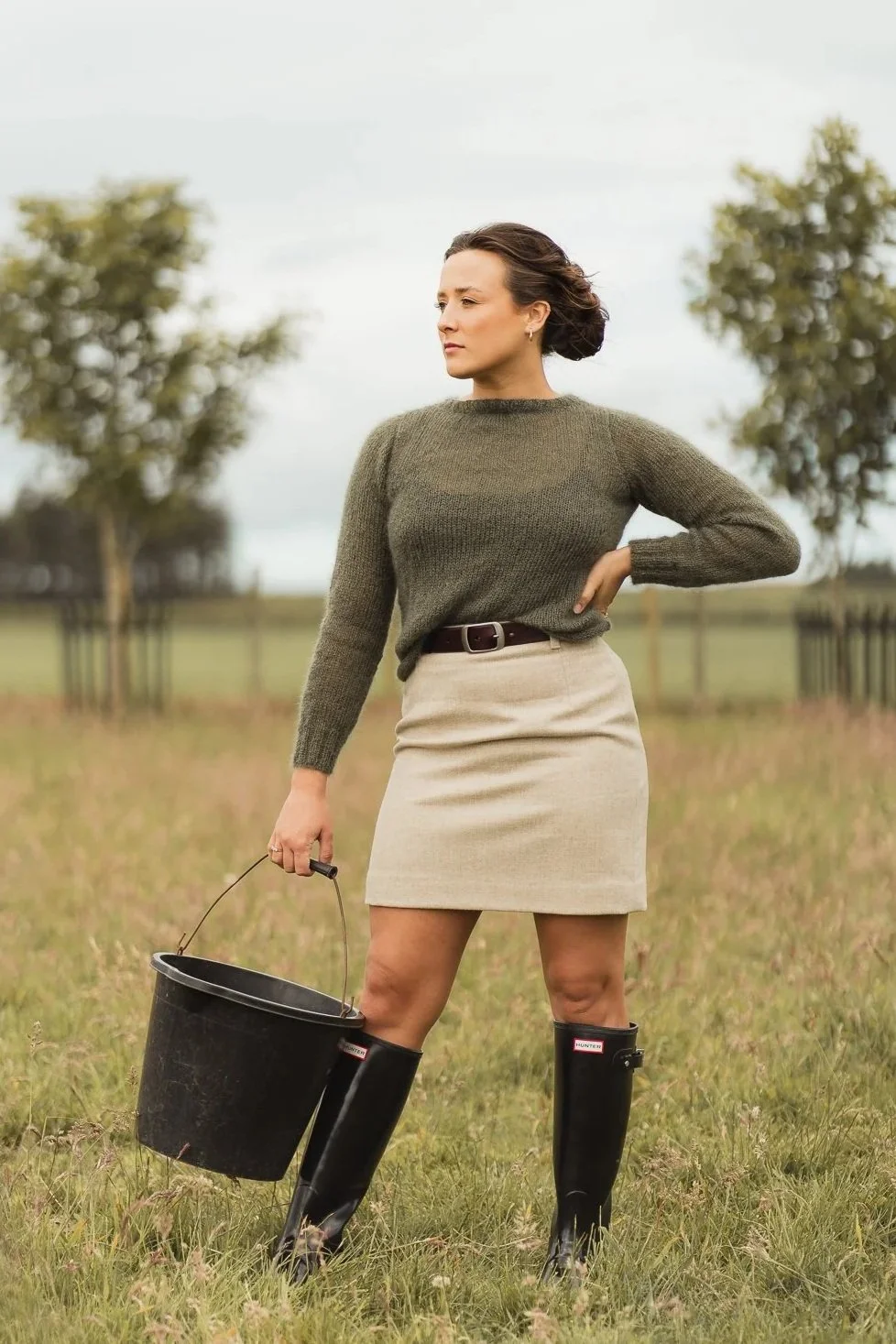
(Image: Our Charlotte Mohair Jumper and Emily Wool Pencil Skirt).
A Fibre With a Future
In these uncertain times, returning to natural fibres feels both ancient and radical. Mohair and wool remind us that clothing does not have to cost the earth to be beautiful.
It can begin quietly on a hillside.
It can be shaped slowly by human hands.
And it can carry warmth — not only of body, but of story.